Through Their Eyes or Over Their Shoulder: How Camera Perspective Shapes Player Identity
Published on August 9, 2024

The moment you boot up a new game, before you've made a single choice about your character's appearance or abilities, a fundamental decision has already been made for you: how you'll see the world. Will you peer through your character's eyes, experiencing every moment from their exact vantage point? Or will you watch them from behind, observing their actions like a director following their protagonist through a scene? This seemingly technical choice—first-person versus third-person perspective—profoundly influences how we connect with our virtual avatars and shapes the very nature of our gaming identity.
The psychology of camera perspective in games reveals a fascinating paradox: some players feel most connected to their character when they can't see them at all, while others need that external view to truly inhabit their role. This deep dive explores why perspective matters so much to player-character identification, examining the cognitive and emotional mechanisms that make us feel like we're truly "becoming" our avatar—or watching our idealized self navigate a virtual world.
The Immersion Paradox: Seeing Through vs. Seeing As
First-person perspective seems like the obvious choice for maximum immersion. After all, we experience our own lives in first-person—we see the world through our eyes, not from a camera floating behind our heads. Games like Skyrim, Fallout, and Dishonored leverage this natural viewpoint to create what researchers call "perceptual immersion": the sensation that you're physically present in the game world, looking out through your character's eyes at a tangible environment.
This perceptual alignment creates powerful psychological effects. When you reach out to open a door in a first-person game, your brain processes the virtual hand as an extension of your own body. Studies using functional MRI scans show that the motor cortex activates when players perform actions in first-person games, even though they're just pressing buttons. Your brain, in a sense, believes it's performing these actions, creating a direct sensorimotor connection between you and your character.
Yet here's the paradox: many players report feeling less connected to their first-person characters than their third-person ones. The reason lies in a crucial distinction between embodiment and identification. First-person perspective excels at embodiment—making you feel like you're physically present in the space. But identification, the sense that this character represents you or an idealized version of you, often requires seeing your character as a distinct entity you can observe and relate to.
Think about how we form connections with people in real life. We don't just experience others through their eyes; we see them, observe their body language, watch how they move through space. Third-person perspective provides this same observational distance, allowing you to develop a relationship with your character as a separate being you're guiding through their journey. You're not trying to be them—you're watching them be the hero you've created.
The Witcher Effect: When Distance Creates Connection
The Witcher 3 provides a masterclass in third-person character identification. Despite playing as a predefined character—Geralt of Rivia, with his own personality, history, and relationships—millions of players report feeling deeply connected to him. This seems counterintuitive: shouldn't playing a blank-slate character in first-person create stronger identification than controlling a fully-realized character from outside?
" The third-person camera lets me see Geralt as a character I'm invested in, not just a pair of hands holding swords. I watch him walk, fight, and interact with others, and I feel proud of the choices I'm making for him. It's like directing a movie where I care deeply about the protagonist. "
— Player testimonial from gaming psychology research
The answer lies in what psychologists call "narrative transportation." Third-person perspective positions you as both participant and observer, allowing you to experience the story while simultaneously watching it unfold. You see Geralt's reactions, his body language, the way NPCs respond to his presence. This visual feedback creates a richer narrative context that helps you understand and connect with the character's emotional journey.
Moreover, third-person perspective enables what researchers term "aspirational identification." When you can see your character, you can admire them. You watch them perform incredible feats, wear impressive armor, move with grace and power. This visual representation of competence and capability becomes a source of pride and satisfaction. You're not just experiencing success—you're watching your avatar embody it, creating a feedback loop where their achievements feel like your achievements because you can see the results of your decisions manifested in their appearance and actions.
The Witcher 3's camera also provides crucial social context. You see how Geralt stands in relation to other characters, observe the physical dynamics of conversations, watch romantic moments unfold with cinematic framing. These visual cues provide emotional information that first-person perspective often struggles to convey. When Geralt embraces Yennefer or Triss, you see the full scene, understanding the emotional weight in a way that a first-person view of someone's shoulder simply couldn't capture.
Skyrim's Choice: The Power of Perspective Switching
Skyrim offers both first and third-person perspectives, allowing players to switch at will. This design choice reveals fascinating patterns in how different players use perspective to manage their sense of identity and immersion. Research into player behavior shows that most Skyrim players don't stick exclusively to one perspective—they switch based on context, using each viewpoint for different psychological purposes.
Many players report using first-person for exploration and combat, where the immediate sensory experience enhances tension and presence. The narrow field of view creates vulnerability—you can't see what's behind you, making every dungeon corner genuinely threatening. Your character's hands and weapons fill the screen, creating that crucial sensorimotor connection that makes swinging a sword or drawing a bow feel tactile and immediate.

But then they switch to third-person for different reasons: to admire their character's appearance after acquiring new armor, to appreciate the scale of the environment during scenic moments, or to watch their character's animations during social interactions. This perspective-switching behavior suggests that players are actively managing two different types of connection with their character—the embodied "I am here" feeling of first-person and the observational "this is my character" feeling of third-person.
The ability to switch perspectives also serves an important role in maintaining the fantasy. When first-person immersion breaks—perhaps due to a glitch, an awkward animation, or a moment that reminds you you're playing a game—switching to third-person can help re-establish your connection by shifting from embodiment to identification. You're no longer trying to be your character; you're watching them, which requires less suspension of disbelief and can be more forgiving of technical imperfections.
Interestingly, players who invest heavily in character customization tend to spend more time in third-person perspective. This makes psychological sense: if you've spent an hour crafting your character's appearance, you want to see the results of that creative effort. The visual feedback of seeing your unique character moving through the world reinforces your sense of ownership and creative expression. Your character becomes a walking representation of your aesthetic choices and creative vision.
The Neuroscience of Perspective: What Your Brain Sees
Recent neuroscience research has begun to uncover the brain mechanisms underlying perspective-based identification. Studies using EEG and fMRI technology reveal that first-person and third-person perspectives activate different neural networks, suggesting they engage fundamentally different cognitive processes.
First-person perspective strongly activates the brain's spatial navigation systems—the same networks that help you navigate physical space in real life. The hippocampus and parietal cortex, crucial for spatial memory and orientation, show heightened activity during first-person gameplay. Your brain is literally treating the virtual environment as a real space you're moving through, building cognitive maps and spatial memories just as it would in the physical world.
Third-person perspective, conversely, activates brain regions associated with social cognition and theory of mind—the ability to understand others' mental states. The temporoparietal junction and medial prefrontal cortex, areas that light up when we think about other people's thoughts and feelings, show increased activity during third-person gameplay. Your brain is processing your character as a separate agent whose actions and experiences you're interpreting and predicting.
This neural distinction helps explain why perspective affects emotional responses differently. First-person perspective tends to amplify immediate emotional reactions—fear, excitement, surprise—because your brain's threat-detection systems respond to virtual dangers as if they were real. Third-person perspective, while potentially less viscerally intense, enables more complex emotional responses like pride, empathy, and narrative satisfaction because you're engaging social-cognitive systems designed for understanding others' experiences.
The research also reveals individual differences in perspective preference correlate with personality traits. Players high in trait empathy and social orientation tend to prefer third-person perspectives, possibly because they're more comfortable and skilled at understanding experiences from an external viewpoint. Players high in sensation-seeking and present-focused attention tend to prefer first-person, drawn to the immediate sensory intensity it provides.
Embodiment and Agency: The Control Dimension
Beyond visual perspective, the sense of agency—feeling that you're causing your character's actions—plays a crucial role in player-character identification. Interestingly, perspective influences how we experience agency in subtle but important ways.
First-person perspective creates what researchers call "direct agency"—the feeling that your inputs immediately translate into character actions. When you press forward, you move forward. When you aim and shoot, the bullet goes where you're looking. This tight coupling between input and visual feedback creates a strong sense of control and responsibility. Your character's actions feel like your actions because there's minimal perceptual distance between intention and execution.
Key Insight: The Agency Spectrum
First-person perspective creates direct agency (I am doing this), while third-person creates mediated agency (I am directing this character to do this). Neither is inherently superior—they serve different psychological needs and create different types of satisfaction.
- Direct agency enhances moment-to-moment engagement and visceral satisfaction
- Mediated agency enables strategic thinking and narrative appreciation
- Both types of agency contribute to overall sense of player-character connection
Third-person perspective creates "mediated agency"—you're directing your character rather than being your character. This introduces a slight perceptual delay between your intention and seeing the result, as you watch your character respond to your inputs. While this might seem like it would weaken the sense of control, many players find it actually enhances their strategic thinking and decision-making. You're not just reacting; you're choreographing your character's actions, which can create a different but equally satisfying sense of mastery.
This distinction becomes particularly important in games with complex combat systems. Dark Souls and similar games use third-person perspective specifically because it allows players to see their character's full body positioning, enemy positions, and environmental hazards simultaneously. The mediated agency of third-person perspective actually enhances the sense of skillful control because you can see the results of your precise timing and positioning. Your character becomes an extension of your strategic thinking rather than your reflexes.
The type of agency that resonates with individual players often reflects their broader approach to gaming. Players who value immediate feedback and reactive gameplay tend to prefer first-person's direct agency. Players who enjoy planning, strategy, and seeing the bigger picture often prefer third-person's mediated agency. Neither preference is better—they're different ways of experiencing control and competence in virtual spaces.
Customization and the Mirror Effect
The relationship between perspective and character customization reveals another layer of how we form connections with our avatars. Games that offer extensive customization options face an interesting design challenge: if players invest significant time creating their ideal character, they need opportunities to see and appreciate that creation. This is why many RPGs with deep customization systems default to third-person perspective or offer frequent camera angles that showcase the character.
The psychological principle at work here is what researchers call the "creation effect"—we value things more when we've invested effort in creating them. When you spend an hour adjusting your character's facial features, choosing their hairstyle, and selecting their starting outfit, you're not just making aesthetic choices. You're engaging in a creative act that establishes ownership and emotional investment. That character becomes "yours" in a way that a pre-made character never quite does.
Third-person perspective serves as a constant reminder of this creative investment. Every time you see your character on screen, you're seeing the results of your choices. This visual feedback reinforces your sense of ownership and can actually deepen your connection to the character over time. You're not just playing a role; you're watching your creation come to life and succeed in the game world.
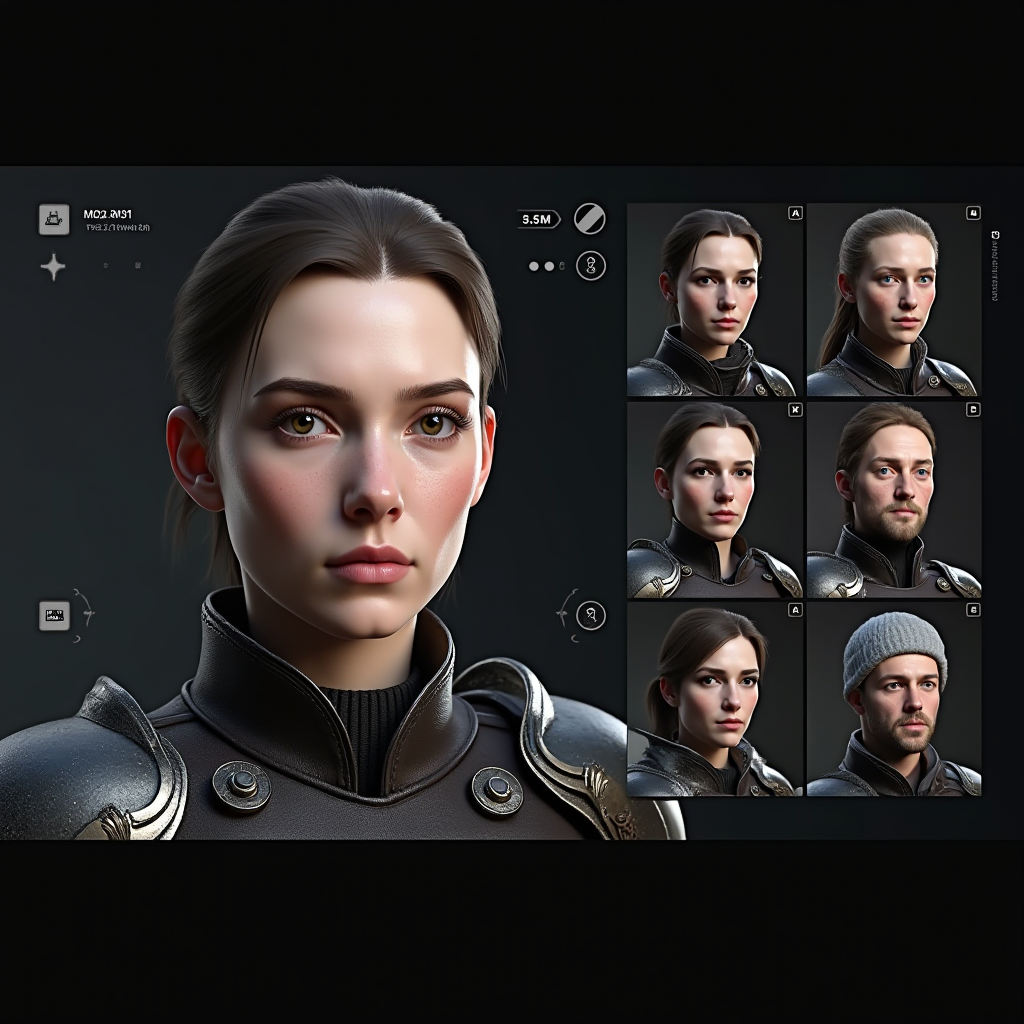
This creates an interesting tension in first-person games with customization. Games like Fallout 4 and Cyberpunk 2077 offer extensive character creation but then show you your character primarily in first-person. Players often report feeling disconnected from their customization choices because they rarely see the results. The game provides mirrors, photo modes, and cutscenes to address this, but these feel like concessions to a fundamental mismatch between the creative investment in customization and the limited visual feedback of first-person gameplay.
Some players solve this by taking frequent screenshots or using photo modes extensively, creating external opportunities to view and appreciate their character. Others report that the rare moments when they do see their character—in reflections, cutscenes, or inventory screens—become particularly meaningful precisely because they're uncommon. The scarcity of these viewing opportunities can actually increase their emotional impact, making each glimpse of your character feel special.
The Future of Perspective: VR and Beyond
Virtual reality represents a fascinating evolution in the perspective debate. VR is inherently first-person—you can't have a third-person view when you're wearing a headset that tracks your actual head movements. Yet VR creates a level of embodiment that traditional first-person games can't match. When you look down and see virtual hands that move with your real hands, when you physically duck behind cover or reach out to grab objects, the connection between you and your virtual body becomes almost seamless.
This enhanced embodiment in VR reveals something important about perspective and identification: it's not just about the camera angle, but about the quality and consistency of the sensorimotor feedback. VR's ability to track your actual body movements and translate them directly into virtual actions creates a level of presence that makes the lack of third-person view less relevant. You don't need to see your character because you feel like you are your character in a more complete way than traditional first-person games can achieve.
However, VR also highlights some advantages of third-person perspective that we might take for granted. VR games struggle with locomotion—moving through space without physically walking—because it can cause motion sickness when your visual input doesn't match your physical sensations. Third-person games never face this issue because the perceptual distance between you and your character makes it clear you're controlling a separate entity. The mediated agency of third-person perspective actually protects against sensory conflicts that can break immersion in VR.
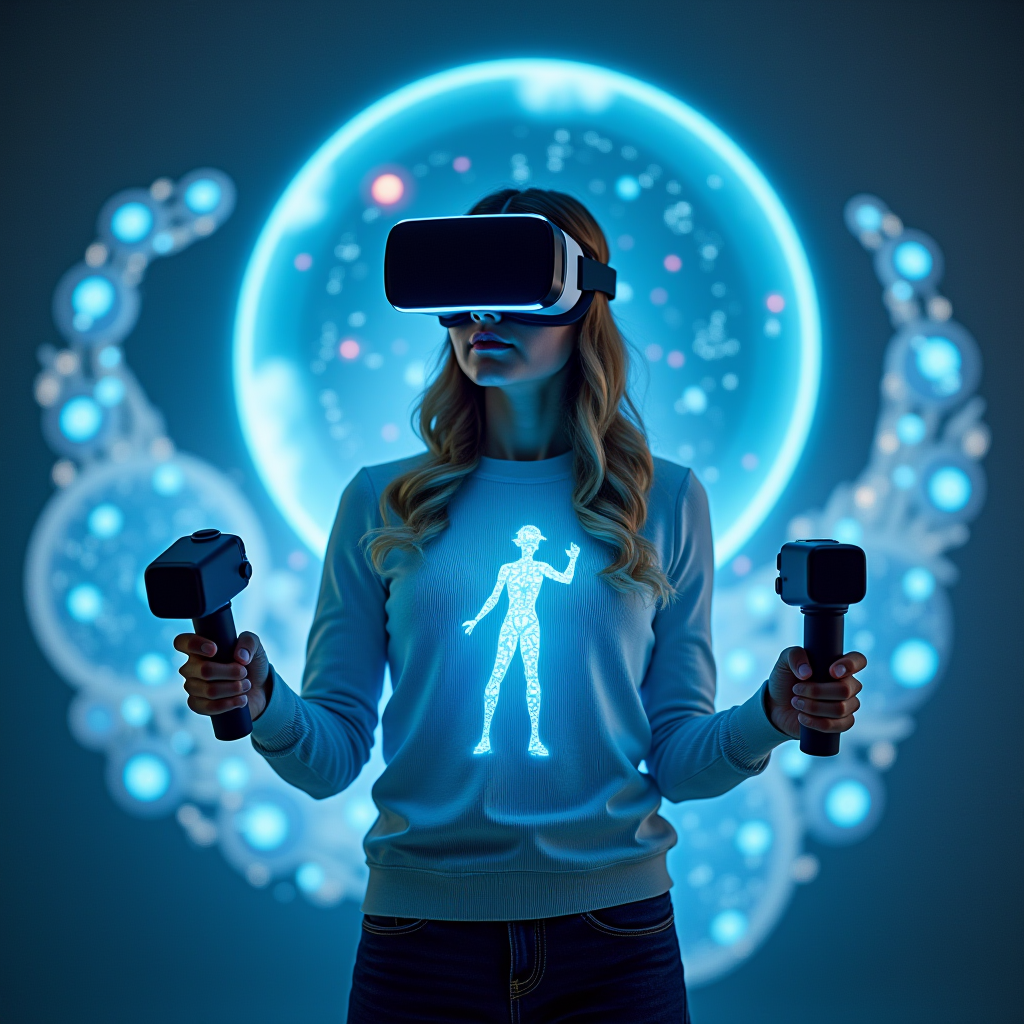
Some VR games are experimenting with hybrid approaches—primarily first-person gameplay with occasional third-person moments for specific actions or cutscenes. Others are exploring "out-of-body" experiences where you can temporarily view your character from outside, providing the benefits of third-person perspective while maintaining VR's embodied presence. These experiments suggest that even in VR, there's value in occasionally stepping back and seeing yourself as others see you.
Looking further ahead, technologies like brain-computer interfaces and advanced haptic feedback might eventually blur the line between first and third-person identification entirely. If we can create virtual experiences that feel genuinely embodied while also providing the strategic awareness and visual feedback of third-person perspective, we might transcend the current dichotomy. But for now, the choice between seeing through your character's eyes and watching them from outside remains one of the most fundamental decisions in game design—and one of the most personal preferences for players.
Finding Your Perspective: Personal Preference and Play Style
Understanding how perspective affects player-character identification isn't just academically interesting—it can help you make more informed choices about which games to play and how to play them. If you've ever felt disconnected from a character or struggled to get immersed in a game, perspective might be a contributing factor.
Consider what type of connection you're seeking with your character. Do you want to feel like you're physically present in the game world, experiencing everything directly? First-person perspective will likely serve you better. Do you want to create and watch an idealized version of yourself or a character you admire? Third-person perspective might create a stronger connection. Do you value immediate, visceral reactions or strategic, thoughtful gameplay? Your answer might point you toward one perspective or the other.
Perspective Preference Guide
You might prefer first-person if you:
- Value immediate sensory immersion and presence
- Enjoy reactive, fast-paced gameplay
- Want to feel like you're physically in the game world
- Prefer minimal visual distance between you and the action
You might prefer third-person if you:
- Enjoy creating and customizing characters
- Value strategic awareness and tactical positioning
- Want to see your character's appearance and animations
- Prefer narrative distance and observational engagement
It's also worth experimenting with games that offer both perspectives. Pay attention to when you naturally switch between them and what each perspective provides. You might discover that you use first-person for certain activities (exploration, combat) and third-person for others (social interactions, admiring scenery). This self-awareness can help you understand your own play style and preferences more deeply.
Remember that perspective preference isn't fixed—it can change based on your mood, the type of game, or even your life circumstances. Some players report preferring first-person when they want to escape and lose themselves in a game, but preferring third-person when they want to maintain more conscious control and awareness. Others find the opposite: third-person helps them relax and enjoy the spectacle, while first-person demands their full attention and engagement.
The beauty of modern gaming is that we have access to both perspectives, often within the same game. Rather than viewing this as a technical choice, we can appreciate it as a psychological tool—a way to modulate our relationship with our virtual avatars and shape our gaming experience to match our current needs and desires.
Conclusion: Through Their Eyes and Over Their Shoulder
The question of whether to see through your character's eyes or watch them from behind isn't just a matter of camera placement—it's a fundamental choice about how you want to relate to your virtual identity. First-person perspective offers embodiment, presence, and direct sensory immersion. Third-person perspective provides identification, observation, and strategic awareness. Neither is objectively better; they serve different psychological needs and create different types of player-character connections.

What makes this topic so fascinating is how it reveals the complexity of player-character identification. We don't just "become" our characters or simply "control" them—we engage in a sophisticated psychological dance that involves embodiment, identification, agency, and observation. Perspective is one of the primary tools we use to choreograph this dance, shifting between different modes of connection based on our needs and the game's demands.
As games continue to evolve, we'll likely see even more sophisticated approaches to perspective and identification. VR is already pushing the boundaries of embodiment, while games like Death Stranding experiment with dynamic camera systems that shift perspective based on context. The future might bring us experiences that seamlessly blend first and third-person perspectives, or entirely new viewpoints we haven't yet imagined.
But regardless of technological advances, the fundamental psychological principles will remain. We'll always need to balance embodiment with identification, presence with observation, direct agency with strategic awareness. The perspective through which we view our virtual avatars will continue to shape how we connect with them, how we experience their worlds, and ultimately, how we use games to explore and express our own identities.
So the next time you start a new game, pay attention to the perspective. Notice how it makes you feel, how it shapes your connection to your character, and how it influences your play style. Whether you're looking through their eyes or watching over their shoulder, you're engaging in a profound act of psychological projection—inhabiting a virtual identity that's simultaneously you and not-you, real and imagined, embodied and observed. That's the magic of gaming perspective, and it's a magic worth understanding.